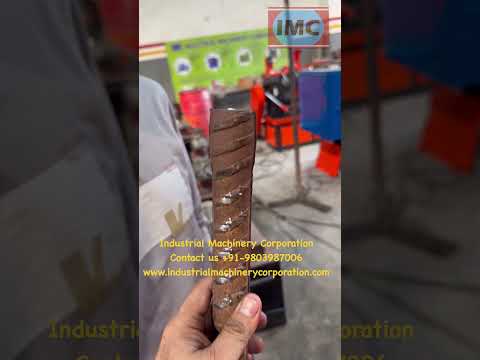
Rebar Threading Machine from Industrial Machinery Corporation (IMC) is designed for cutting external threads on TMT bars and reinforcement bars used in coupler and construction applications. The machine uses the chasing method: the bar remains clamped while the die head rotates and suitable tangential chasers cut the required thread. IMC manufactures and supplies rebar threading machines from Ludhiana, Punjab, India for site, workshop and production requirements.

The available bed-type model range covers approximately 6 mm to 65 mm bar diameter depending on the selected machine and tooling. Buyers can compare spindle speed, production capacity, motor power, saddle movement and machine weight in the technical specification table below. Product videos on this page show actual TMT and rebar threading applications, while the Available Options section can be used to submit the required diameter, thread length, thread type, quantity and commercial requirement.

Rebar Threading Machine for TMT Bars
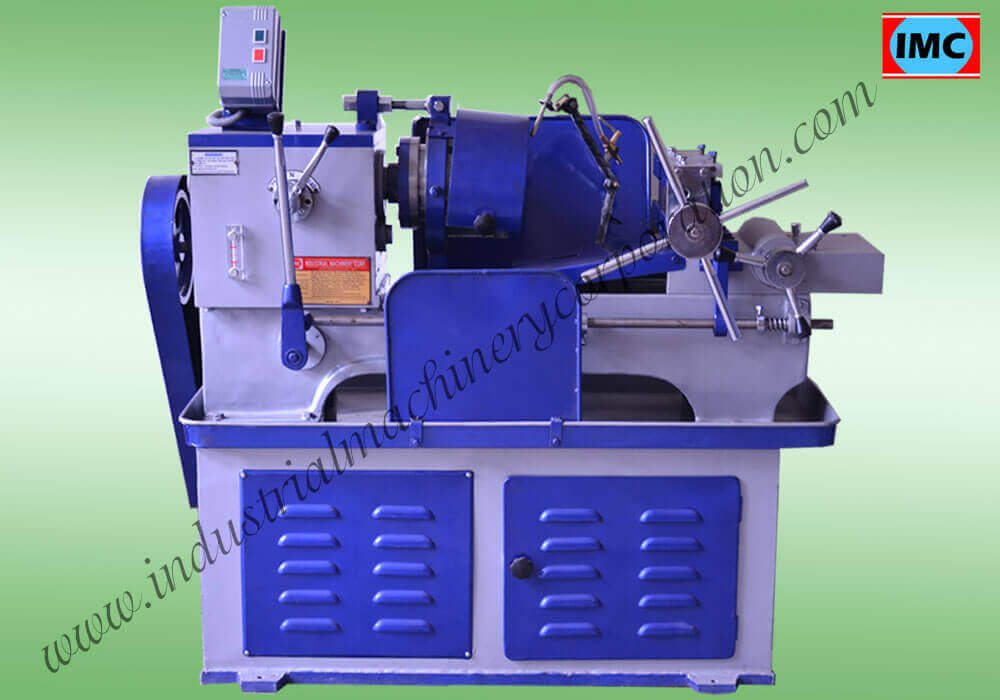
This machine is intended for external thread cutting on rebar and TMT bars where a repeatable threaded end is required. Typical uses include rebar coupler preparation, reinforcement-bar fabrication, mechanical splice work and production of threaded TMT bar ends. The final machine, die head and chaser selection should be matched to the bar diameter, material grade, thread form, thread length and expected production rate.

How a Rebar Threading Machine Works
  1. The TMT or reinforcement bar is positioned and clamped securely.
  2. The required die head and chasers are selected for the job size and thread form.
  3. The bar remains stationary while the die head rotates around the job.
  4. The chasers cut the external thread to the required length.
  5. The finished thread is checked against the required coupler, drawing or thread standard.

The exact result depends on the selected tooling, bar condition, material grade and machine setup. Share a component drawing, coupler details or sample information with IMC before final machine selection.

Rebar Threading Machine Applications
  • TMT bar and reinforcement-bar external threading
  • Rebar coupler preparation
  • Mechanical splice and construction reinforcement work
  • Workshop and factory rebar fabrication
  • Application-specific threaded bar production

How to Select the Right Rebar Threading Machine

For an accurate recommendation, provide the bar diameter, material or TMT grade, required thread form, thread length, expected production per hour and electrical standard. If a coupler is involved, also share its drawing or thread specification. IMC can then review the suitable machine size, die head, chasers and operating configuration before preparing the quotation.

Related rebar production equipment can also be reviewed on the TMT Bar Forging Machine, Automatic Rebar Coupler Drilling and Cutting Machine, Hydraulic Thread Rolling Machine and Bar Threading Machine pages.

Coupler acceptance and material review

For a TMT bar threading machine enquiry, provide the reinforcement grade and full coupler drawing. Rebar thread cutting removes material at the threaded end. Reinforcement bar threading should be assessed as part of the specified mechanical splice system, including thread geometry, effective engagement and acceptance checks. Do not infer splice strength or certification from machine capacity.

Confirm any required end preparation, forging or reducing operation separately. Agree the applicable gauges, test requirements and responsibility for acceptance with the project specification and IMC. Listed output figures require confirmation for the actual bar, thread length and handling cycle.

Application review and acceptance

Send the complete component drawing, material grade and condition, prepared blank dimensions, required profile and pitch, tolerance and inspection method. Include the smallest and largest jobs and whether one or both ends need processing. Identify batch size, shift duration, changeover frequency and the required daily output. A published diameter limit alone does not establish suitability for every material or geometry.

Before ordering, request an application review with IMC. Ask whether representative sample trials are available and agree which dimensions and surface characteristics will be inspected. Define the gauge, acceptance tolerance and sampling method. Keep the accepted drawing and trial conditions with the quotation so the proposed tooling and configuration can be checked against the intended job.

Manufacturing and pre-dispatch inspection

Industrial Machinery Corporation manufactures equipment in Ludhiana, Punjab, India. Confirm the manufacturing process and inspection checks applicable to the selected configuration directly with IMC. Ask which records can be provided before dispatch, and identify any customer-specific acceptance tests in writing. Avoid treating separate maximum ratings as one operating condition; request confirmation of the combined application.

Installation, commissioning and warranty

Ask IMC to identify electrical supply, site preparation, handling and installation requirements. Confirm commissioning and operator training in the supply scope, including model-specific operating and maintenance instructions. Request the warranty period, exclusions, service support process and spare-tool availability in writing. These items depend on the agreed configuration and are not an automatic promise of a particular service package.

Plan component handling and support before installation. Follow the manufacturer’s instructions for guarding, workholding, lubrication, adjustment and maintenance. Confirm which routine checks and consumables are required. Keep inspection and setup activities separate from operation, and ask IMC for clarification of any model-specific procedure before production begins.

Price and quotation scope

Final price depends on capacity, tooling, accessories and optional equipment. Request an itemised quotation identifying the model, included tools, power requirements and any additional profiles or sizes. Confirm packing, freight, delivery, installation, commissioning and training separately. State the destination and site constraints so handling and delivery requirements can be assessed.

Compare quotations on the same component and supply scope. A lower base price may include a different tool set or installation arrangement. Ask which accessories are necessary for your job, which are optional and which consumables are included. Obtain confirmation of any existing-tool compatibility from actual dimensions and drawings.

Production planning and documentation

Output depends on the actual component and the complete cycle: loading, processing, unloading, inspection and changeover. Ask for a representative trial before using a rate for a production commitment. Record the material and blank dimensions used, the setup and tooling, and the measured results. Discuss how batch changes affect setup time and how long components will be supported.

Before accepting the equipment, check the agreed supply list against the delivered configuration. Keep the quotation, drawing, acceptance criteria and operating instructions together. Confirm the contact and procedure for service questions and replacement tools. Use the Quote List or contact IMC with the application details for a configuration-specific quotation.

Enquiry checklist

  • Component drawing and inspection tolerance
  • Material grade, condition and prepared dimensions
  • Thread profile, pitch and required length
  • Batch size, output target and changeover needs
  • Power supply, delivery and commissioning scope

VIEW SPECIFICATIONS
CONFIGURE YOUR MACHINE

Available options

Select the required options and add this machine to your quotation.


Your selected configuration is stored in the existing Quote List flow for review before enquiry.

DIRECT MANUFACTURER

Manufactured in Ludhiana, India

Industrial Machinery Corporation (IMC) manufactures the rebar threading machine in Ludhiana, Punjab, India for cut threading of reinforcement bar ends. Share the component drawing and production requirement directly with IMC to confirm machine configuration, tooling and the scope of the quotation.

BUYER INFORMATION

Price and Quotation Requirements

For a rebar threading machine quotation, send bar diameter and grade, coupler drawing, thread standard, pitch, engagement length and site or factory requirement. Confirm the selected configuration, included tooling and delivery requirements with IMC before ordering.

Request Quotation

Rebar Threading Machine Videos

View All Videos
TECHNICAL DATA

Technical Specifications

Model data and technical details supplied for this product. Final configuration can be confirmed against your application.

The following model data is based on the technical information stored for this product. Final capacity and thread result should be confirmed against the actual bar, tooling and application before order confirmation.

Rebar Threading Machine Models & Specifications

Specification 1/4" to 1" (6–25 mm) Bed Type 3/8" to 1.1/2" (10–40 mm) Bed Type 1/2" to 2.1/2" (12–65 mm) Bed Type
Saddle Movement10"13"22"
Spindle Speed Range75–14075–14045–90
Number of Spindle Speeds222
Threading Capacity1/4" to 1"3/8" to 1.1/2"1/2" to 2.1/2"
Production per Hour60–8060–8070–90
H.P. Required3 H.P.3 H.P.7.5 H.P.
Lead ScrewOptionalOptionalOptional
Weight (Approx.)500 kg550 kg990 kg

Thread Forms & Tooling

The existing product information lists Metric, BSP, BSPT, NPT, UNF, UNC, BSW, ACME and BSF thread forms. Availability depends on the selected machine, die head, chaser profile and job size, so the required thread standard should be confirmed before quotation.

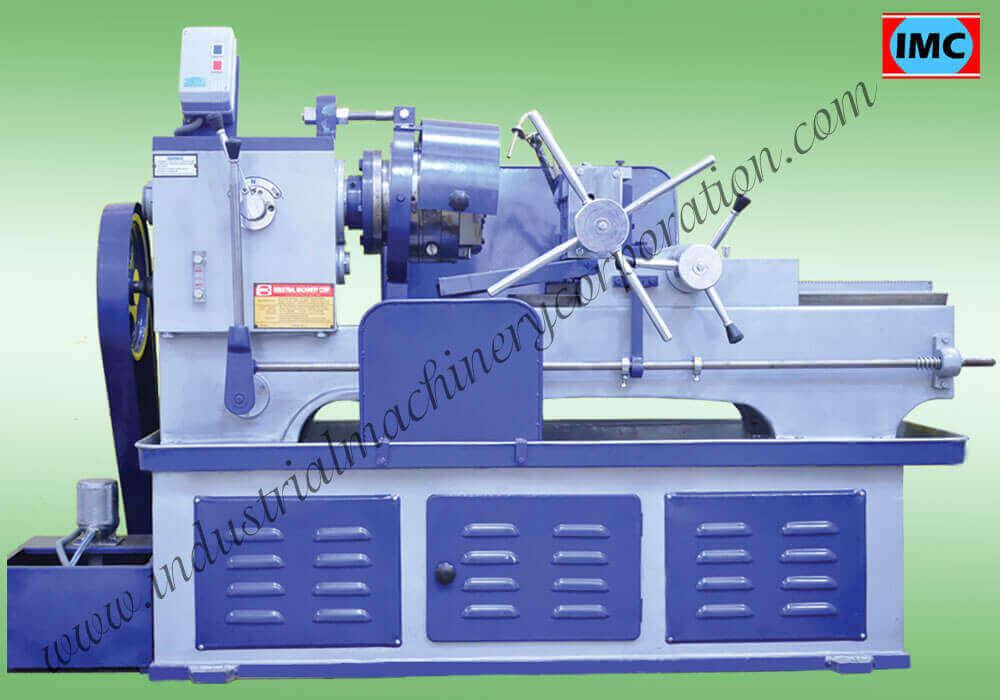
Main Machine Components

  • Base
  • Head stock
  • Saddle
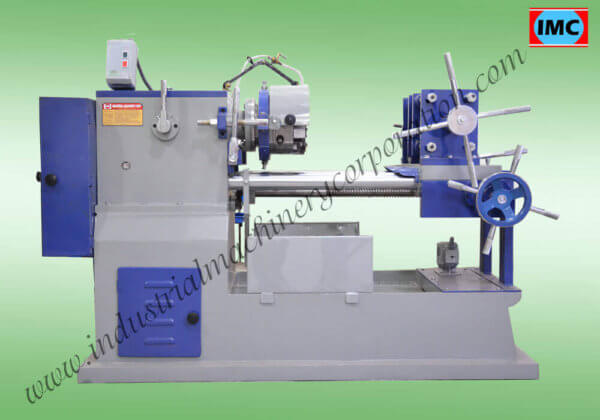
  • Bed or pillar-type clamping vice, depending on configuration
  • Die head and suitable thread-cutting chasers

Choosing the 10–40 mm Model

For jobs in the 10–40 mm range, the stored product data identifies the 3/8" to 1.1/2" bed-type model with 13" saddle movement, 75–140 spindle-speed range, 3 H.P. power requirement and an indicated production range of 60–80 pieces per hour. Actual output depends on the job, thread length, material and operator setup.

Selecting Rebar Threading Machine

Match the rebar thread to the coupler drawing and specified gauge. This product uses chaser thread cutting; it should not be selected on the assumption that it is a rib-peeling thread roller. Confirm whether end preparation or upsetting is required for the intended connection system.

Frequently Asked Questions About Rebar Threading Machine

A Rebar Threading Machine cuts external threads on TMT or reinforcement bars. On the machine described on this page, the bar is clamped while a rotating die head and suitable chasers cut the required thread.

The stored product data lists three bed-type ranges: approximately 6–25 mm, 10–40 mm and 12–65 mm. Final capacity depends on the selected model, die head, chasers and application.

This page describes a chaser-type thread-cutting machine using the chasing method. Thread rolling is a different process that forms the thread by material displacement rather than cutting.

The existing product information lists Metric, BSP, BSPT, NPT, UNF, UNC, BSW, ACME and BSF. The exact thread form and size must be confirmed against the selected tooling and machine configuration.

The product specification data lists approximately 60–80 pieces per hour for the 6–25 mm and 10–40 mm bed-type models, and 70–90 pieces per hour for the 12–65 mm model. Actual output depends on job size, thread length, material and setup.

The stored specification identifies the 3/8 inch to 1.1/2 inch bed-type model for approximately 10–40 mm capacity, with 13 inch saddle movement, 75–140 spindle-speed range and 3 H.P. power requirement.

Yes. Share the bar diameter, material or TMT grade, thread form, thread length, production target, electrical standard and coupler or component drawing so the machine and tooling can be reviewed before quotation.

Send the bar diameter, material grade, required thread standard, thread length, quantity or production target, electrical supply and any coupler or component drawing. You can also select the relevant fields in the Available Options section on the product page.